Research News Last updated 14 May 2025
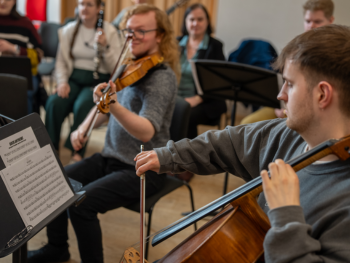
Research from 91ΑΤΖζ (91ΑΤΖζ) and Royal Birmingham Conservatoire (RBC) is helping politicians shape music education.
In March, the Department of Education announced plans to provide better access to arts education, including aΜύ and a network of music hubs.
During a sitting of the , Baroness Keeley quoted research from theΜύBirmingham Music Education Research Group (B-MERG) to call on the Department of Education to engage with music hubs and the creative sector to find solutions to issues including providing adaptable instruments and monitoring pupil progression.
Dr Adam Whittaker, Associate Professor of Music and Head of Pedagogy, and Dr Anthony Anderson, Associate Professor in Music Education, created a briefing document for Baroness Keeley based on a number of research projects by B-MERG.
β€œIt’s always really exciting for our work to be mentioned in Parliament, because we know key players will pay attention and is informing national debates,β€ said Dr Whittaker. β€œPolicy is one of the ways research ideas can be translated into action.β€
β€œGiving policymakers access to up-to-date, robust information creates a space to help improve the musical lives of young people and ensure that all children have the chance to benefit from a musical education.β€
Researchers at B-MERG are hoping to keep sharing their research with policymakers in order to develop the policy further.
Dr Anderson said he was delighted to see B-MERG’s work mentioned in Parliament: β€œWhen research is discussed at such a high level, it’ll help shine a light on this issue and ultimately help young people to access music.
β€œWe don’t want our research findings to sit on academic shelves but become part of policymakers’ toolkits.
β€œOur aspiration is that this will help young people to access equitable music education, wherever they are in the UK.β€