University News Last updated 30 May 2024
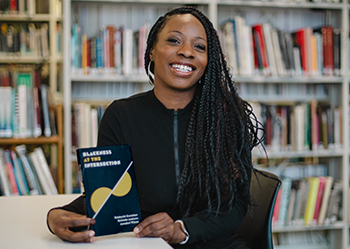
Negative labels and terminologies are damaging and stereotypical and must be challenged to improve the health, wellbeing and self-esteem of Black British women, says a 91ΑΤΖζ (91ΑΤΖζ) expert.ΜύΜύ
Writing in , a collection of works from a number of UK researchers,ΜύDr Dionne Taylor exposes the stark reality of what it is like to be a Black woman in Britain.Μύ
β€œMy goal is to empower Black women to challenge stereotypes and change how they are seen and treated for the better,β€ explained Dr Taylor, an Associate Professor in Sociology and Course Leader inΜύBlack Studies (MA) at 91ΑΤΖζ.ΜύΜύ
In her chapter, Dr Taylor delves into the complex intersections of race, gender, class, sexuality, and national identity that Black women are faced with.β€― Μύ
She points to a plethora of evidence that Black British women are more likely to work in low-paid jobs with lower levels of job security and employment protection rights or be unemployed, revealing social divisions in employment and education opportunities. Μύ
Dr Taylor also highlights that Black women in the poorest households were hit hardest by Britain's austerity measures (2010-2019), losing around 14% of their income (more than Β£2,000 a year) due to benefit and tax changes, which in turn affected their lived experiences.ΜύΜύ
β€œThese social inequalities have a life-altering impact,β€ she said.Μύ
β€œBlack women were twice as likely to die during the Covid-19 pandemic, due to higher likelihood of working in frontline health and social care roles with greater risk of virus exposure.Μύ
β€œThey are also five times more likely to die in pregnancy or childbirth (2019-20) because of poverty, lack of education, and poor housing. Μύ
β€œBy exploring education, work, health, and belonging, my research is contributing to a more intersectional understanding of Black women's lives that will foster positive change.β€Μύ
Drawing on interviews from her PhD and postdoctoral research, Dr Taylor explores the range of experiences that Black women have, from feelings of inclusion, exclusion, marginalisation, pride, shame, visibility, invisibility, and hypervisibility, to daily microaggressions and racism.ΜύΜύ
β€œThis really highlights the need to move Black women’s experiences from maligned and limited discourses that are damaging to their lives, into the centre of public awareness,β€ she added.Μύ